
That old dining table or dresser may look solid, but wood is a living, breathing material, and that’s exactly what makes it vulnerable. Temperature swings cause wood to expand and contract over time, weakening joints, warping surfaces, and cracking finishes. Add pests to the equation, and a piece you’ve owned for decades can deteriorate in a single storage season.
The good news is that with the right preparation and the right storage environment from Compass Self Storage, you can shield your furniture from both threats without spending a fortune. Prevention is always less costly than restoration, and far less painful than replacing something irreplaceable. Here’s what you need to know.
Why Wood Furniture Is More Vulnerable Than You Think
Wood expands in heat and contracts in cold, and repeated cycling between the two gradually weakens glued joints, buckles veneer, and causes surface finishes to peel. Furniture stored in a garage, attic, or basement is especially prone to this kind of damage because temperatures in those spaces can swing dramatically between seasons.
Pests are just as destructive. Common culprits include:
- Wood-boring beetles lay eggs in raw or unfinished wood, leaving small round exit holes and fine powdery dust.
- Termites often target furniture stored in low-traffic rooms or units where damage goes unnoticed for months.
- Rodents gnaw through wood, upholstery, and even drawer hardware in search of nesting material.
For homeowners in the South, these risks are amplified. Georgia’s warm climate creates ideal conditions for insect activity year round, making our climate-controlled storage in Georgia a smart investment for anyone with wooden pieces.
Prepping Your Wood Furniture Before It Goes Into Storage
What you do before loading the truck matters just as much as where you store the furniture. Residual oils, food particles, and dust attract insects, so preparation is your first line of pest prevention for furniture.
- Clean every surface with a wood-safe cleaner and let pieces dry completely. Even slight residue can attract pests.
- Apply a quality furniture wax or polish to create a protective barrier over exposed wood grain.
- Disassemble large pieces where possible. Table legs, bed frames, and shelving units are easier to wrap and put less stress on joints during transport.
- Use breathable covers like cotton furniture blankets rather than plastic wrap, which traps heat and can accelerate warping even in a temperature-stable environment.
- Inspect for existing damage. Small round holes, fine sawdust, or gnaw marks are signs of active pest activity. Don’t bring an infested piece into a shared storage unit.
Smart Storage Strategies to Keep Pests Out
Once your furniture is prepped, how you arrange and maintain the unit makes a real difference. A few simple habits go a long way toward keeping insects and rodents out of your space.
- Elevate furniture off the floor using pallets or furniture risers to eliminate ground-level pest entry points and allow air to circulate underneath.
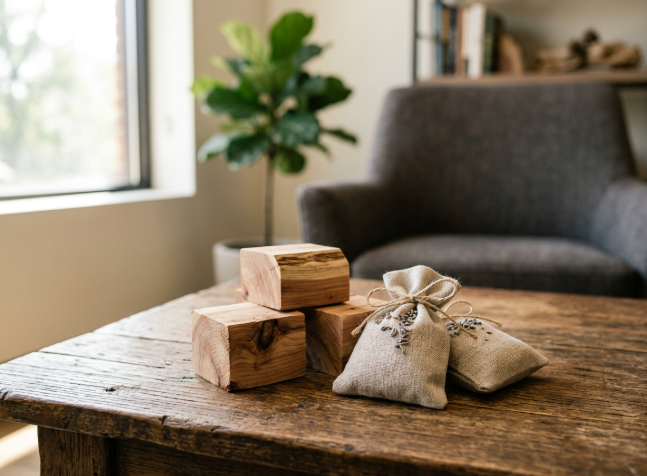
- Place cedar blocks or sachets near wood pieces. Cedar’s natural oils are a proven, chemical-free deterrent for common insects.
- Keep food and organic materials out. Cardboard boxes with food residue, potting soil, and unsealed items attract the same pests you’re trying to repel.
- Choose a facility with drive-up access so you can inspect and rotate items regularly without disturbing the entire unit.
The same principle applies beyond furniture storage. If you’re exploring boat and RV storage options, keep organic materials separate from any wood components on board. Cross-contamination between storage items is a surprisingly common way pest problems start.
Not all storage units offer the same protection. A standard unit exposes your furniture to the same temperature swings as an outdoor shed. A temperature-controlled storage unit, by contrast, maintains a consistent range throughout the year, avoiding the expansion and contraction cycles that silently destroy wood over time.
Storing musical instruments alongside wood furniture? The same environment that protects a walnut credenza also protects a guitar or violin. Consistent temperature helps to avoid cracking, warping, and finish damage. Compass Self Storage locations across Georgia and the Southeast offer temperature-stable units suited for exactly these kinds of sensitive items. If you’re near the Atlanta metro area, our storage units in Marietta are worth exploring for their climate-controlled options.
Keep Your Wood Furniture Looking Its Best for Years to Come
Long-term storage doesn’t mean set-it-and-forget-it. A little ongoing attention goes a long way:
- Inspect every 60 to 90 days: Check for surface changes or any shifting within the unit.
- Reapply furniture wax or conditioner annually: Do this even while pieces are in storage to maintain the protective barrier on the wood.
- Acclimate furniture gradually: Moving a piece directly from a cool storage unit into a heated room can cause surface cracking; give it time to adjust.
- Rotate seasonal pieces: With a flexible schedule that works for your lifestyle, using month-to-month lease storage helps you avoid paying for space you don’t need year round.
With the right prep and the right unit, storing wood furniture doesn’t have to feel like a gamble. Whether you’re protecting an old table during a move or reclaiming your space at home during a renovation, a temperature-controlled environment paired with smart storage habits gives you genuine peace of mind. Browse our climate-controlled storage units in Kennesaw or explore other Compass Self Storage Georgia locations to find a facility that fits your needs.